
The quiet asset
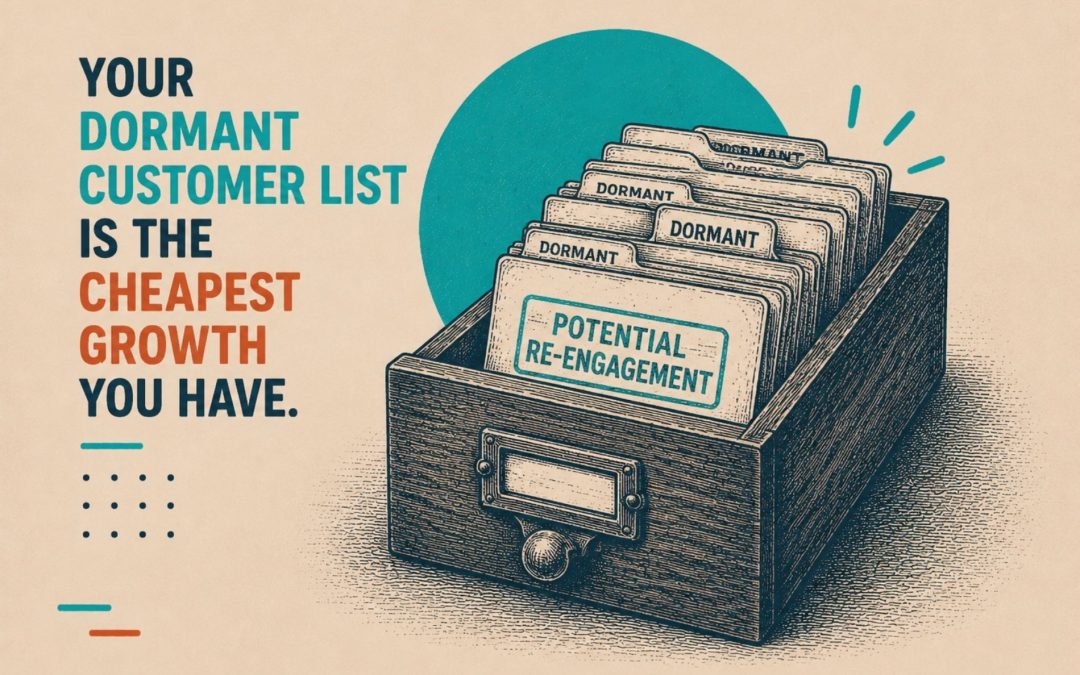
Every business has one. A list of people who bought once, or enquired seriously, and then went quiet. Not unhappy, not gone for good, just lapsed. Most owners barely think about them, because they do not feel like an opportunity. They feel like the past. That instinct is expensive. We have argued before that marketing has two jobs, and most businesses only do one. This is the sharpest example of the job that gets skipped: the dormant customer list is, for most small businesses, the single cheapest source of growth available, and the one almost nobody works.
The reason it is cheap is simple. These people have already crossed the hardest line in business, which is trusting you with their money. Re-earning the attention of someone who has paid you before costs a fraction of what it takes to earn it from a stranger who has never heard your name. You are not building trust from zero. You are reminding someone who already has it.
It is worth being honest about the limits, because pretending there are none leads straight to desperation. Some of that list is genuinely gone. People move, their needs change, a few had an experience that means they will not return. Not every lapsed customer is winnable, and treating the list like a guaranteed pot of gold produces exactly the pushy, discount-soaked messages that make people unsubscribe. But here is the thing: because the cost of reaching them is close to nothing, you do not need most of them to come back. Reviving a small fraction of a list you already own will usually beat the same effort and money spent chasing new strangers.
A stranger has to be convinced you exist. A lapsed customer only has to be reminded.
Where your list actually is
The most common objection is that you do not have a list. You almost certainly do, it is just scattered. It is in your past invoices and sales records, your booking or point-of-sale system, the old enquiries sitting in your inbox, the spreadsheet someone started two years ago, the stack of business cards in a drawer. The first task is not clever marketing. It is the dull, valuable work of pulling all of that into one place so you can actually see who you already know. Most owners have never done this, which is exactly why the asset stays invisible.
A word on doing it properly: contacting people you already have a genuine business relationship with is normal and expected, but keep it clean. Do not buy lists or scrape contacts you were never given. Make it easy to opt out, and honour it the moment someone does. The goal is to be welcome in the inbox, not merely legal in it.
What to actually say
This is where most win-back attempts fall over. The default move is the apologetic discount: we miss you, here is ten per cent off. It feels active, but it does two unhelpful things. It leads with a price cut to people who were happy to pay full price, and it quietly trains your customers to wait for the next discount before they buy. There is a better opening. The first message to a dormant customer should help them, not sell to them. A genuinely useful update, a new thing that solves a problem you know they have, a straight answer to a question people in their position always ask. Earn the second open before you ask for anything.
The re-entry rule: the first message to a dormant customer should help them, not sell to them. Earn the second open before you ask for the sale.
How often, and for how long
One message is not a strategy. The owner who emailed their list once, saw little, and concluded it does not work has simply mistaken a single attempt for an effort. Reactivation is a rhythm, not an event. A small, regular cadence of useful contact, something like monthly, does the work that a one-off blast never can, because it takes more than one touch to move from forgotten to front of mind. Equally, it is not a daily barrage. The people who unsubscribe in droves are usually on the receiving end of frequency without value. Keep it regular, keep it useful, and let the ones who want to leave go gracefully. A smaller list of people who want to hear from you is worth more than a big one that resents you.
The same list, more value
Your dormant list does more than buy again. The happy ones are also your best source of reviews and referrals, which feed the other job of marketing entirely: being found by new people. The business that shows up as the obvious, well-reviewed choice did not buy that reputation, it asked for it, from exactly these people. So when you reach back out, make it effortless for a satisfied past customer to leave a review or pass your name to someone who needs you. One clear, low-pressure ask and a link that takes two taps. The same list you are reviving to win repeat work is quietly improving how easily strangers find you too.
None of this needs a system to begin. Pull your past customers into one place, write one genuinely useful message, send it, and add an easy path to review or refer. That single afternoon of work is usually the highest-return marketing a small business can do, and it is the first place we look when we sit down with a business, long before anyone reaches for an ad budget.
Common questions about winning back customers
What counts as a dormant customer?
Anyone who bought from you or seriously enquired and has since gone quiet. There is no strict cutoff. Someone who has not been in touch for six or twelve months still counts, and is often easier to revive than you would expect.
Isn’t it spammy to contact people who haven’t bought in ages?
Not if you have a genuine prior relationship, the message is useful, and it is easy to opt out. Spam is unsolicited and self-serving. A helpful note to a past customer, with a clear way to leave, is neither.
Should I offer a discount to win them back?
You do not need to, and we would steer you away from leading with one. Discounts train people to wait for the next deal and cut your margin on customers who were happy to pay full price. Lead with usefulness or a genuine reason to return instead.
How many will actually come back?
There is no fixed number, and some of the list is gone for good. But because the cost of reaching them is close to nothing, even a small fraction returning is among the highest returns in your marketing. The point is the ratio of reward to effort, not a guaranteed headcount.

General marketing commentary, not advice tailored to your specific business.
Recent Comments